


Every fall, the same thing happens. License renewal reminders start hitting inboxes, CE transcripts get pulled up for the first time since January, and event organizers scramble to schedule one last activity before a hard deadline. If you wait until December to check where you stand, you're already behind.
This checklist is built for two audiences: professionals trying to hit their own renewal deadlines, and CE providers who want to help their attendees, and their own accreditation status, close out the year cleanly.
Not every license renews on a calendar-year cycle, but a large share do, and even the ones that don't tend to cluster deadlines around Q4. State boards and accrediting bodies often set renewal windows that align with fiscal or calendar years. That means a few predictable things happen every fall:
If you're both a CE consumer and a CE provider, you're managing two versions of the same deadline problem at the same time.
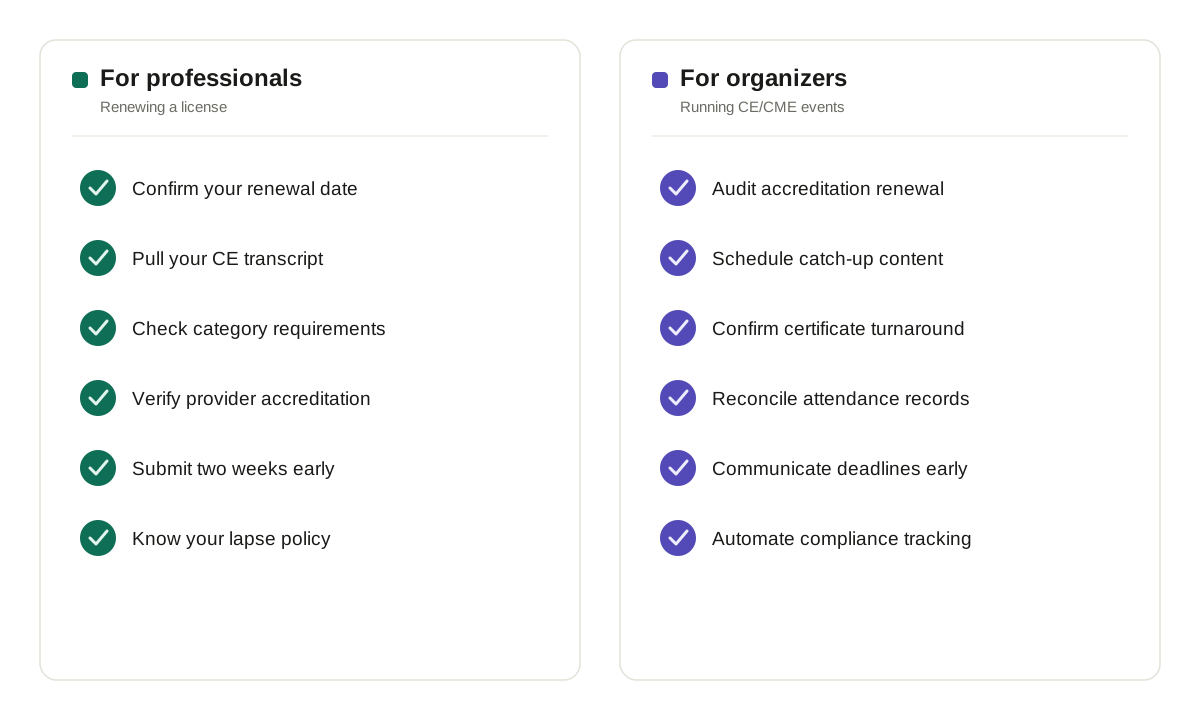
1. Confirm your renewal date. Don't assume it's December 31.
Many boards stagger renewal dates by license number or last name. Log into your state board's licensee portal and confirm the actual date, not the date you think it is.
2. Pull your CE transcript now, not in December.
If you've taken courses through multiple providers, your credits may be scattered across different platforms. Start compiling certificates today so you're not chasing down proof of completion during renewal week.
3. Check for category-specific requirements.
Many licenses require more than just total hours. Think ethics hours, jurisprudence or law hours, or subject-specific mandates like pain management, cultural competency, or suicide prevention. A shortfall in one specific category can hold up your renewal even if your total hour count looks fine.
4. Verify your provider is actually accredited for your board.
Not all CE credits are accepted by all boards. Confirm the accrediting body or provider is recognized by your specific state licensing board before you rely on a course for credit. This is one of the most common, and most avoidable, renewal problems.
5. Leave a buffer for processing time.
Some boards process renewals in days; others take weeks. Submitting on the deadline itself is a risk. Aim to submit at least two weeks early.
6. Know your late or lapse policy.
If you're going to miss the deadline, understand what happens next. It might be a grace period with a late fee, a lapse to inactive status, or a full relicensing requirement. This affects how urgently you need to act right now.
1. Audit your own accreditation renewal timeline.
If your organization holds state approval or accreditation through ACCME, APA, NBCC, or a state board, check your own reaccreditation or reporting deadlines. These often run on annual or multi-year cycles that are easy to lose track of amid day-to-day event planning.
2. Schedule at least one credit catch-up event or on-demand release.
Attendees who are short on hours will actively search for last-minute options in Q4. A short live webinar or a batch of on-demand content released in November gives your audience, and your registration numbers, a natural boost.
3. Confirm certificate turnaround time.
If your platform requires manual certificate generation, year-end volume can create a backlog right when attendees need proof of completion fastest. Automated certificate delivery removes this bottleneck entirely.
4. Reconcile your attendance and evaluation records.
Most accrediting bodies require documentation of attendance verification and post-activity evaluations. Year-end is the right time to confirm your records are complete and exportable, not the week before an audit.
5. Communicate deadlines to your audience early.
Don't assume your attendees know their own renewal dates. A simple email in October or November letting them know what's coming up, and how to fit it in, drives registrations and builds goodwill.
If you're a professional, pull your transcript in October, identify gaps by category rather than just total hours, and register for anything you're missing by mid-November.
If you're a CE provider or event organizer, treat November as your busiest content month, not December. By the time December hits, attendees need options that are fast, verifiable, and already accredited, not events they have to wait on.
Staying ahead of CE deadlines is a lot easier when attendance tracking, evaluations, and certificate delivery are automated instead of manual. See how CE-Go handles compliance and automation for CE/CME events of any size.


